
1 Why do the nations rage
and the peoples plot in vain?
2 The kings of the earth take their stand,
and the rulers conspire together
against the Lord and his Anointed One:
3 “Let’s tear off their chains
and throw their ropes off of us.”4 The one enthroned in heaven laughs;
the Lord ridicules them.
5 Then he speaks to them in his anger
and terrifies them in his wrath:
6 “I have installed my king
on Zion, my holy mountain.”7 I will declare the Lord’s decree.
He said to me, “You are my Son;
today I have become your Father.
8 Ask of me,
and I will make the nations your inheritance
and the ends of the earth your possession.
9 You will break them with an iron scepter;
you will shatter them like pottery.”10 So now, kings, be wise;
receive instruction, you judges of the earth.
11 Serve the Lord with reverential awe
and rejoice with trembling.
12 Pay homage to the Son or he will be angry
and you will perish in your rebellion,
for his anger may ignite at any moment.
All who take refuge in him are happy. (Psalm 8; CSB)
As I explained in my previous post, postmillennialism is a perspective that believes Christ’s reign over all things will become gradually more evident as history unfolds. While most modern Christians have a pessimistic view of the future of the world, postmillennialists are convinced that as the Great Commission is carried out, the world will slowly become a better place. Despite remnants of resistance and unbelief, as the church shares the gospel and works for the good of all people, a significant majority of the world will be won over to Christ. At the end of this time (called ‘the church age’), Christ will return to complete and consummate the redemption of his world. When he comes back, the world will not be an evil disaster zone of chaos and unbelief, but a world brimming with belief and goodness – even though sin and suffering still bear upon humanity.
At first, this might sound like a naïve, utopian fantasy – an escapist dreamworld. That’s exactly what I first thought when I heard about this way of understanding the future. But I have come to understand what more people are now realising: Postmillennial hope is right there on the pages of your Bible. It’s just that you’ve probably never had anyone point it out to you. Or you’ve been trained to not see it by well-meaning Bible teachers. But the postmillennial hope is there. And I want you to see it for yourself.
You can thank me later.
Psalm 2 says God will establish an eternal king
Psalm 2 is a celebration and reminder of the certainty of God’s promises back in 2 Samuel chapter 7. God had promised King David that his kingly line will last forever through one of his descendants:
“‘The Lord declares to you: The Lord himself will make a house for you. 12 When your time comes and you rest with your ancestors, I will raise up after you your descendant, who will come from your body, and I will establish his kingdom. 13 He is the one who will build a house for my name, and I will establish the throne of his kingdom forever. 14 I will be his father, and he will be my son. When he does wrong, I will discipline him with a rod of men and blows from mortals. 15 But my faithful love will never leave him as it did when I removed it from Saul, whom I removed from before you. 16 Your house and kingdom will endure before me forever, and your throne will be established forever.’” (2 Samuel 7:11-16; CSB)
Here God assures David that through one of his descendants (notice the use of the singular above), he will establish God’s “house” – reference to the locus of God’s rule in the temple. This king will be God’s “son” (v.14) and rule forever.
Anyone even slightly familiar with Old Testament prophetic material will know there is often an initial fulfilment close to the time the prophecy is given, followed by an ultimate fulfilment at a later time. In the case of 2 Samuel 7, David’s son Solomon is the most of obvious descendant who will ‘come from his own body’ (vv.12-14). This is what God intends to say about about the immediate future. However, the language of enduring divine favour (v.15) and the establishment of an eternal kingdom (v.16) point well beyond Solomon. In short, through David, Solomon and their descendants, God will establish a regime that will outlast all others. This is something we saw in my previous post examining the book of Daniel.
Now back to Psalm 2.
This Psalm is both wisdom literature (a song) and prophecy at the same time. God’s anointed ruler ponders the baffling defiance of those who oppose the Creator and the King he has appointed to rule. God’s answer to those who oppose him is to laugh at them and point out that he has personally overseen the establishment of the king’s rule in “Zion” (often used of Jerusalem; v.2). God then says to his King,
Ask of me,
and I will make the nations your inheritance
and the ends of the earth your possession.
You will break them with an iron scepter;
you will shatter them like pottery.” (Psalm 2:8-9)
In the New Testament, Psalm 2 is quoted in a number of places as pointing to King David’s ultimate son, Jesus. He is the forever king, who stands (like the temple did) at the very centre of God’s plans. See Acts 4:25–26, 13:33; Hebrews 1:5, 5:5:; Revelation 2:26–27, 12:5, and 19:15.
Without a doubt, the resurrected and ascended Christ fulfils Psalm 2.
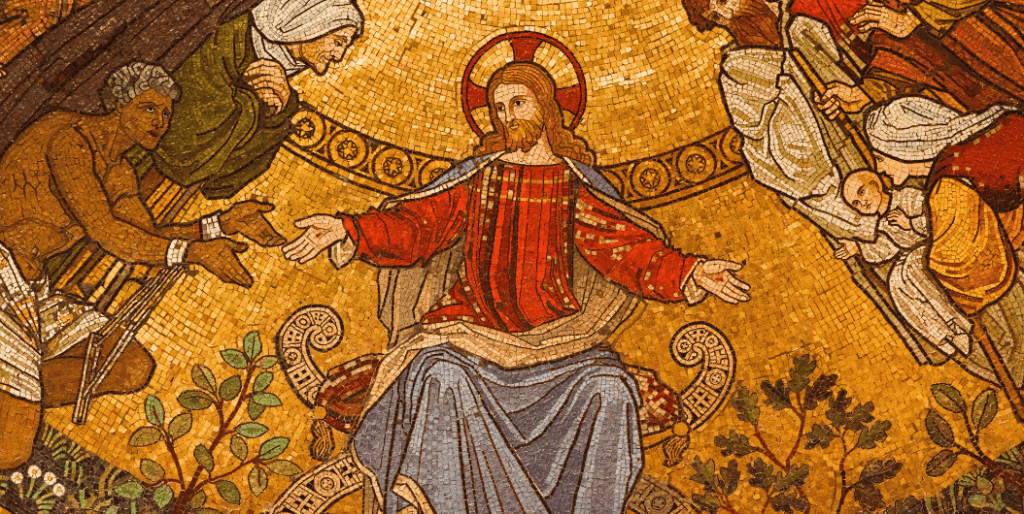
Psalm 2 points to the current, active rule of King Jesus over the nations
If Psalm 2 pointed forward to the kingly rule of Jesus Christ, the issue of timing becomes very important. When will Jesus rule the nations? Psalm 2 insists that the rulers of the world’s nations should reverence and obey God’s king, not at the end of time, but now . . .
So now, kings, be wise;
receive instruction, you judges of the earth.
Serve the Lord with reverential awe
and rejoice with trembling.
Pay homage to the Son or he will be angry
and you will perish in your rebellion,
for his anger may ignite at any moment.
All who take refuge in him are happy. (Psalm 8:10-12)
The reality of Jesus’ rule over the nations is so important that the rulers of the nations of the world are obliged to reverence and obey him. Not in a distant future, but now. The fact that God’s appointed King is to enjoy complete rule over the earth’s present kingdoms is found in many Old Testament passages:
Genesis 49:10 foretells that the ruler will come through the tribe of Judah, and that “the obedience of the nations shall be his.”
Daniel 7:13-14 Describes a heavenly vision of the “Son of Man” receiving “dominion and glory and a kingdom, that all peoples, nations, and languages should serve him.”
Zechariah 9:10 details the global, peaceful extent of the Messiah’s kingdom, stating, “He will proclaim peace to the nations. His rule will extend from sea to sea and from the River to the ends of the earth.”
Famously, in Psalm 110:1-2 the Lord declares to the Messiah, “Sit at my right hand until I make your enemies a footstool for your feet… Rule in the midst of your enemies!”
Not only will this king rule forever, he will have an active, ongoing rule over the nations. By divine right, he will be granted supreme authority over the affairs of the nations – not at the very end of time – but in the real world that the first readers of this Psalm inhabited.
Jesus rules the nations in history, not just at the end of it
For many modern Christians, Jesus technically rules, but in a distant ‘spiritual’ sense. It’s like he’s here ‘in our hearts’ but in reality he’s somewhere in the 14th dimension. They reduce the extent of Jesus’ rule to the church, and the rest of the world is essentially run by the devil. But all through the Bible we find reminders that God’s eternal King has the entire universe as the realm in which he exercises his active rule.
I used to believe that the only time Jesus would truly rule the nations is after he returns and all of God’s enemies are judged and put away. But I am now convinced this is not what the Bible is saying.
Essentially, the problem with believing that Jesus will ‘spiritually’ rule until he eventually returns to wrap up history is that you can’t rule the nations if they’re gone. The Bible regularly states that God’s King will rule the nations. But if the rule of Jesus only truly takes place after his return and final judgement, all that will remain is one unified group of the redeemed who worship and serve him. How can the kings of the nations owe any obligations to King Jesus if those national realms have been rescinded? It makes better sense to hold a view of the strong and growing practical impact of King Jesus on the rulers of the nations while there are still nations! This means that Jesus actually rules over the nations now. And as the Great Commission is carried out, over time we will see the gospel have a greater influence in all nations.
Jesus fulfils God’s promises in Psalm 2, meaning he really rules over the nations right now. You can’t rule over the nations if they don’t exist any more. And you can’t rule unless you actually, well, rule.
This is a reason for hope, and a call to action
If what I’ve said is right, we have cause to be very hopeful. Despite the difficulties and opposition we encounter, we know that King Jesus will gradually exert a growing influence over the nations. The Great Commission will not be a ‘side hustle’ in the history pages of the world. It will be successful as the King of Kings puts his enemies down, and makes his beautiful, loving reign more evident. As this happens God will graciously change hearts, lives, communities and nations. And he’ll do it by his own power and strength, working through everyday people like you and me.
The good news of King Jesus is good for the whole world. It’s his world to rule. Let’s make sure our faith grasps hold of that.


You must be logged in to post a comment.