
26 As the soldiers led him away, they seized Simon from Cyrene, who was on his way in from the country, and put the cross on him and made him carry it behind Jesus. 27 A large number of people followed him, including women who mourned and wailed for him. 28 Jesus turned and said to them, “Daughters of Jerusalem, do not weep for me; weep for yourselves and for your children. 29 For the time will come when you will say, ‘Blessed are the childless women, the wombs that never bore and the breasts that never nursed!’ 30 Then
‘they will say to the mountains, “Fall on us!”
and to the hills, “Cover us!”’31 For if people do these things when the tree is green, what will happen when it is dry?” (Luke 23:26-31; NIV)
Another Easter has come and gone, and in many churches across the world this part of Luke’s gospel has undoubtedly been read. It’s only a small part of the wider story of Jesus’ journey to the cross and beyond, which is probably why it doesn’t get much attention.
From the middle of chapter 19 in Luke’s gospel, the focus has been fixed on what is happening to Jesus – the plots, the betrayal, the accusations, and the violence. However, on his way to his own death Jesus pauses long enough to tell the wailing women something that should have deeply shocked them. He essentially says, “Don’t cry for me. You should be crying for yourselves, and your kids.” In other words, what’s happening to Jesus is terrible, but there is trouble coming that will make mothers in Jerusalem wish they’d never had children at all. It’s going to be that bad.
What could this trouble be? Jesus’ warning to the women would constitute foolish false prophecy if it didn’t come true within the lifetime of some of the women he is addressing, or at least within the lifetime of their children.
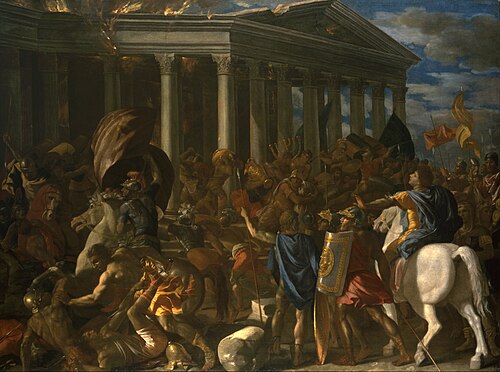
The only major event impacting Jerusalem during the first century which could possibly correspond to Jesus’ dire warning is the siege of Jerusalem and its destruction by Roman forces under the command of Titus, the son of Emperor Vespasian. The destruction of the Jerusalem temple in 70AD is a matter of historical fact, and essentially brought to an end Old Testament Judaism as it had been practiced for centuries.
But why would God judge Jerusalem?
Jerusalem was central to Jewish identity, especially because of the temple and the cultic practices that took place there (sacrifices, festivals, prayer, worship). The Psalms especially resonate with the importance of the city (which is sometimes called ‘Zion’):
If I forget you, Jerusalem,
may my right hand forget its skill.
May my tongue cling to the roof of my mouth
if I do not remember you,
if I do not consider Jerusalem
my highest joy. (Psalm 137:5-6; all readings in this post are from the NIV)Beautiful in its loftiness,
the joy of the whole earth,
like the heights of Zaphon is Mount Zion,
the city of the Great King.
God is in her citadels;
he has shown himself to be her fortress. (Psalm 48:2-3)For the Lord has chosen Zion,
he has desired it for his dwelling, saying,
“This is my resting place for ever and ever;
here I will sit enthroned, for I have desired it. (Psalm 132:13-14)
How did Jerusalem/Zion come to hold such a high place in God’s purposes? It’s a long story. God had sovereignly chosen to bring blessing to all nations by working in and through his Old Testament people (Genesis 12:1-3). Then he sovereignly chose Jerusalem to function as the religious and social centre of his interactions with his people. It was “the city of King David” (2 Sam. 5:7). It was the city where God had his temple built, in which he would dwell with his people. It was a completely unique arrangement, and an unimaginable blessing for the Jewish people. But this wonderful closeness and divine blessing was set within a wider covenantal context, filled with promises and warnings.
God had warned repeatedly in the Old Testament that he would judge them if they didn’t remain covenantaly loyal to him. While God is loving, patient and gracious, persistent rebellion against him will have lasting consequences (Exodus 34:6-7).
Deuteronomy chapters 28-31 set the scene for later covenant dealings with Israel. Essentially, a faithful, loving response to God will ensure a prosperous life in the Promised Land, but a persistent breaking of covenant with God will bring covenant curses upon them:
However, if you do not obey the Lord your God and do not carefully follow all his commands and decrees I am giving you today, all these curses will come on you and overtake you [ . . . ] The Lord will bring a nation against you from far away, from the ends of the earth, like an eagle swooping down, a nation whose language you will not understand [ . . .] They will lay siege to all the cities throughout your land until the high fortified walls in which you trust fall down. They will besiege all the cities throughout the land the Lord your God is giving you. (Deuteronomy 28:15, 49, 52)
It couldn’t be more clear. Obey and love God, and it will go well with you. Disobey and disregard God, and he’ll turn the lights off. And that’s exactly what happens. Despite many warnings and pleas, the covenant curses are invoked by their rampant sin and idolatry:
Therefore because of you,
Zion will be plowed like a field,
Jerusalem will become a heap of rubble,
the temple hill a mound overgrown with thickets. (Micah 3:12)
This is what the Lord Almighty says:
“Cut down the trees
and build siege ramps against Jerusalem.
This city must be punished;
it is filled with oppression. (Jeremiah 6:6)
These prophetic utterances find their fulfilment in the destruction of the temple at the hands of the Babylonians in 587/586 BC. But God’s covenant-making had always budgeted for the possibility of Israel repenting and fully committing to God again. Back in Deuteronomy,
When all these blessings and curses I have set before you come on you and you take them to heart wherever the Lord your God disperses you among the nations, and when you and your children return to the Lord your God and obey him with all your heart and with all your soul according to everything I command you today, then the Lord your God will restore your fortunes and have compassion on you and gather you again from all the nations where he scattered you. Even if you have been banished to the most distant land under the heavens, from there the Lord your God will gather you and bring you back. He will bring you to the land that belonged to your ancestors, and you will take possession of it. He will make you more prosperous and numerous than your ancestors. The Lord your God will circumcise your hearts and the hearts of your descendants, so that you may love him with all your heart and with all your soul, and live. (Deuteronomy 30:1-6)
If the covenant curses fall upon them, all Israel has to do is genuinely return to God in faith and obedience, and he will restore them and bless them greatly.
Part of Israel’s covenant relationship was God’s giving of promises regarding a future leader who will require the full allegiance of God’s people – one who is the ultimate and true king and prophet:
[Moses said . . ] “The Lord your God will raise up for you a prophet like me from among you, from your fellow Israelites. You must listen to him.”(Deuteronomy 18:15; cf. Acts 3:23!)
“When your days are over and you rest with your ancestors, I will raise up your offspring to succeed you, your own flesh and blood, and I will establish his kingdom. He is the one who will build a house for my Name, and I will establish the throne of his kingdom forever. [ . . .] But my love will never be taken away from him, as I took it away from Saul, whom I removed from before you. Your house and your kingdom will endure forever before me; your throne will be established forever.’” (2 Samuel 7:12-16)
“See, I will send the prophet Elijah to you before that great and dreadful day of the Lord comes. He will turn the hearts of the parents to their children, and the hearts of the children to their parents; or else I will come and strike the land with total destruction.” (Malachi 4:5-6)
So, not only should Israel return to God in love and obedience, they should willingly receive and acknowledge the prophet-King that God had promised to send to them.
But in the New Testament we find that Israel had lost its way, and had not returned to God in repentance and love. That could only mean one thing: God will bring complete destruction on them, unless they respond to the promised King properly. As John the Baptist prepares the way for this coming King/Messiah, it’s not looking good. Here’s John’s warning . . .
Produce fruit in keeping with repentance. And do not think you can say to yourselves, ‘We have Abraham as our father.’ I tell you that out of these stones God can raise up children for Abraham. The ax is already at the root of the trees, and every tree that does not produce good fruit will be cut down and thrown into the fire.
I baptize you with water for repentance. But after me comes one who is more powerful than I, whose sandals I am not worthy to carry. He will baptize you with the Holy Spirit and fire. His winnowing fork is in his hand, and he will clear his threshing floor, gathering his wheat into the barn and burning up the chaff with unquenchable fire.” (Matthew 3:8-12)
The ‘fire’ is not the fire of hell, but the fires of judgement they will experience if they don’t repent and return wholeheartedly to God by accepting the coming Messiah.
It’s do or die. The coming of Jesus to God’s covenant people represents their last chance to avoid the threatened destruction.
Jesus said it himself, using a parable:
“Listen to another parable: There was a landowner who planted a vineyard. He put a wall around it, dug a winepress in it and built a watchtower. Then he rented the vineyard to some farmers and moved to another place. When the harvest time approached, he sent his servants to the tenants to collect his fruit.
“The tenants seized his servants; they beat one, killed another, and stoned a third. Then he sent other servants to them, more than the first time, and the tenants treated them the same way. Last of all, he sent his son to them. ‘They will respect my son,’ he said.
“But when the tenants saw the son, they said to each other, ‘This is the heir. Come, let’s kill him and take his inheritance.’ So they took him and threw him out of the vineyard and killed him.
“Therefore, when the owner of the vineyard comes, what will he do to those tenants?”
“He will bring those wretches to a wretched end,” they replied, “and he will rent the vineyard to other tenants, who will give him his share of the crop at harvest time.”
Jesus said to them, “Have you never read in the Scriptures:
“‘The stone the builders rejected
has become the cornerstone;
the Lord has done this,
and it is marvelous in our eyes’?“Therefore I tell you that the kingdom of God will be taken away from you and given to a people who will produce its fruit. Anyone who falls on this stone will be broken to pieces; anyone on whom it falls will be crushed.” (Matthew 21:33-44)
The children of Abraham – the people of the Mosaic covenant – face their own destruction, and it all hinges on their response to ‘the cornerstone’, Jesus. Will they accept this Messiah? Will they repent and return to God?
Only a few chapters later, Jesus prophetically declares the outcome:
“And so upon you will come all the righteous blood that has been shed on earth, from the blood of righteous Abel to the blood of Zechariah son of Berekiah, whom you murdered between the temple and the altar. Truly I tell you, all this will come on this generation. Jerusalem, Jerusalem, you who kill the prophets and stone those sent to you, how often I have longed to gather your children together, as a hen gathers her chicks under her wings, and you were not willing. Look, your house is left to you desolate.”(Matthew 23:35-38)
God’s judgement for all the wrongful killings of God’s prophetic messengers (especially Jesus), and for all their rejection of God’s patient warnings, will fall upon his Old Covenant people. Their ‘house’ (a metaphor for their Israel as it was once understood) will be desolate. Barren. Lifeless.
Which is why, when Jesus comes to the temple grounds one last time, he teaches his disciples about the temple’s utter destruction:
Jesus left the temple and was walking away when his disciples came up to him to call his attention to its buildings. “Do you see all these things?” he asked. “Truly I tell you, not one stone here will be left on another; every one will be thrown down.” (Matthew 24:1-2)
Every single stone. Every cultic part of the Mosaic Covenant will be destroyed. But when will the history-shaping tragedy take place?
Truly I tell you, this generation will certainly not pass away until all these things have happened. (Matthew 24:34)
A ‘generation’ in the Bible is about 40 years. If Jesus uttered these words in 30AD, as some say he did, when might you expect the destruction of the temple take place? At a time up to about 40 years after Jesus’ death. 70 AD fits the prophetic timeline.
The Old Testament promised it. Jesus proclaimed it. History proves it.
This explains Jesus’ dire words to the wailing women. They are sad he’s about to die. But he says they should be sad for themselves and their children.
In their jealousy and spiritual blindness, many Israelites and their leaders have orchestrated the rejection and execution of their Messiah – their only hope. Now all there is left for Jerusalem is judgement. The covenant curses will fall on upon them.
Why does this matter?
It’s curious that, in the 35 years since my conversion, I have not heard any minister pay much attention to the events of 70AD. On the rare occasion they have gestured in that direction, little effort has been made to connect the destruction of the temple to its covenantal backdrop and a significant portion of prophetic material in the New Testament.
I submit to you that the destruction of the temple in 70AD is significant for a number of good reasons:
- It shows the end point for the covenant curses given within the context of the Mosaic Covenant. God is faithful to the promised covenant blessings and curses he made with Israel in Deuteronomy.
- The destruction of the Temple meant the complete end of the traditional priestly and sacrificial system established in the Old Testament. The cultic functions that were so central to Israel’s relationship with God have been rendered unnecessary by Jesus’ once-for-all death for our sin, and have been rendered functionally impossible by the destruction of the place where sacrifices were meant to take place. 70AD proclaims that the Old Covenant is permanently finished.
- The events of 70AD show Jesus is the prophet-king, par excellence. Jesus prophesied these things would happen within the lifetime of some of his hearers. It all took place, just like he said. Jesus can be trusted.
- The approximate timeframe of 40 years between Jesus’ death and the destruction of the temple is analogous to the 40 years experienced by the Israelites in the desert. Their Old Testament wilderness wanderings were a time when the leadership of God’s people was established, God’s written word was inscribed for them, God’s people were tested (Deut. 8:2-5), and set apart as the special people of God. This is exactly how the 40 years between 30AD and 70AD function. The leadership of the Apostles is questioned and established, the early church was persecuted and tested in many ways, God’s New Testament was inscribed; and once the temple was destroyed, Christianity would emerge radically distinctive from the Judaism that had birthed it. [NB: I believe that the books of the New Testament were all written (at least substantially completed) prior to 70AD. I’ll say more about this at another time.]
- The destruction of the temple in 70AD also helps us understand much of the apocalyptic and prophetic found in the New Testament. It seems that most of the talk about ‘fire’ and ‘destruction’ in the New Testament may have less to do with generating medieval-style conceptions of hell, and more to do with Jerusalem burning while its inhabitants are slaughtered by each other and by the Romans. In rejecting the Messiah, Israel is ‘going to hell’.
The destruction of the Temple in 70AD is very important for understanding the Bible’s overarching story and Jesus’ central place in it. It is a real-world extra-biblical fulfilment of biblical prophecies and covenant curses. It shows Jesus isn’t just a ‘wise teacher’ – he’s the prophet that Moses himself promised would come. His rejection brought upon Israel the promised destruction, and set the scene for the birth of the New Covenant people of God, comprising of Jews and Gentiles who accept God’s Messiah. This New Covenant community were given new leaders, new scriptures (which are intimately connected to the ‘old’ scriptures), and a distinct identity as God’s true people.
I finish with the words of the Apostle Peter.
As you come to him, the living Stone—rejected by humans but chosen by God and precious to him— you also, like living stones, are being built into a spiritual house to be a holy priesthood, offering spiritual sacrifices acceptable to God through Jesus Christ. For in Scripture it says:
“See, I lay a stone in Zion,
a chosen and precious cornerstone,
and the one who trusts in him
will never be put to shame.”Now to you who believe, this stone is precious. But to those who do not believe,
“The stone the builders rejected
has become the cornerstone,”and,
“A stone that causes people to stumble
and a rock that makes them fall.”They stumble because they disobey the message—which is also what they were destined for.
But you are a chosen people, a royal priesthood, a holy nation, God’s special possession, that you may declare the praises of him who called you out of darkness into his wonderful light. Once you were not a people, but now you are the people of God; once you had not received mercy, but now you have received mercy.
(1 Peter 2:4-10)


You must be logged in to post a comment.