
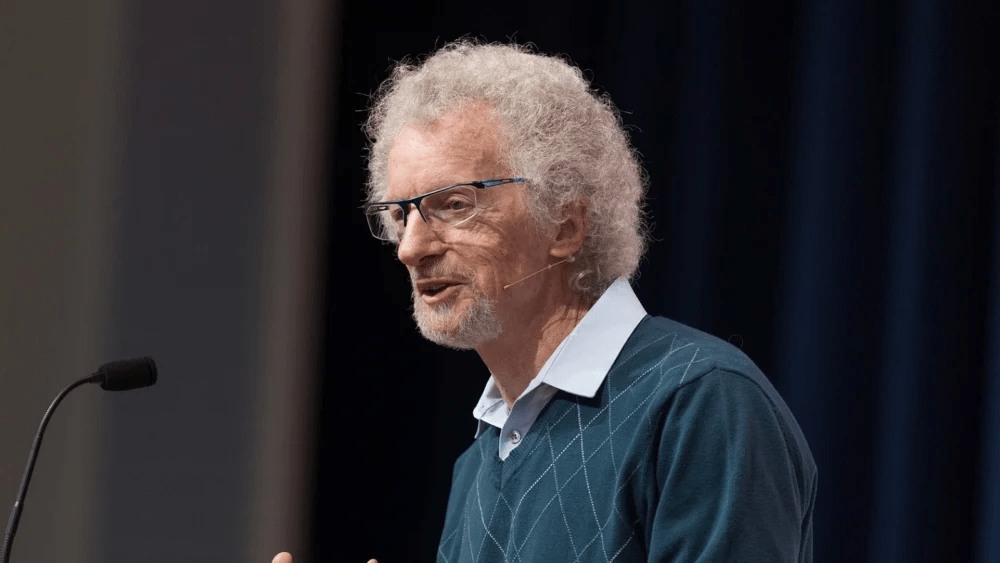
Welp. As Queen once put it . . . another one bites the dust.
Philip Yancey, famous American Christian author, has recently stepped away from writing and speaking engagements over revelations that he had an 8-year extramarital affair with a married woman. Think about that. Eight years. That’s a lot of time spent with another man’s wife, in deep, intimate connection with her. That’s a lot of adultery while posing as a trusted Christian thinker. How horrible.
I’m glad to hear that he has decided to step away from Christian ministry. I appreciate the thoughtful way he expressed his deep regret. I think his current handling of this situation has been as ‘healthy’ as it can be.
Though I’ve never read much of his stuff, the news about him made me angry. It was yet another Christian leader advertising to the world that Christians are phonies. For the sceptics, it’s proof positive that Jesus isn’t really enough after all. I hate that.
In the last 40 years, there have been many proverbial (and sometimes literal) ‘falls from grace’. Here’s a very short list of some of the notable people who have been caught up in some kind of scandal:
- Jim Bakker: A popular televangelist in the 1980s, Bakker was involved in an adultery scandal with his former secretary, Jessica Hahn, and faced charges for fraud and conspiracy related to his PTL Club ministry. He served time in prison for his financial crimes.
- Jimmy Swaggart: A rival of Bakker, Swaggart was a major televangelist who tearfully confessed to moral failure on his television show in 1988 after being caught with a prostitute. He was defrocked by the Assemblies of God denomination.
- Ravi Zacharias: A world-famous Christian apologist, a posthumous investigation revealed widespread sexual misconduct, including the operation of massage parlours where abuse occurred.
- Bill Hybels: The founder of the influential Willow Creek Community Church, Hybels resigned following multiple allegations of sexual misconduct and abuse of power, which he denied.
- James MacDonald: The former pastor of Harvest Bible Chapel, MacDonald was fired in 2019 following allegations of “highly inappropriate” behaviour, including bullying, financial improprieties, and abuse of power.
- Carl Lentz: A former celebrity pastor for Hillsong Church in New York City, Lentz was fired in 2020 due to “moral failures” and breaches of trust, which he later admitted involved an extramarital affair.
- Brian Houston: The global founder of the famous Hillsong Church, Houston resigned in 2022 after internal investigations found he had breached the church’s code of conduct and acted inappropriately toward two different women. There were also questions about financial matters.
- Ted Haggard: The former president of the National Association of Evangelicals, Haggard resigned from his church in 2006 after allegations surfaced of an affair with a male prostitute and crystal meth use.
- Robert Morris: The founder of Gateway Church in Texas, Morris resigned in 2024 following the resurfacing of a past sexual abuse allegation from 1982 involving a 12-year-old girl, which he admitted to but framed as a “moral failing” at the time.
- Tony Evans: The respected founder of Oak Cliff Bible Fellowship, Evans stepped away from his pastoral duties in 2024, citing an “undisclosed sin” and a failure to use “righteous judgment in [his] actions”.
- Bill Gothard: The founder of the Institute in Basic Life Principles (IBLP), Gothard faced numerous accusations of molestation and assault from more than 30 women, including minors, leading to his resignation.
- Mark Driscoll: Co-Founder of Mars Hill Church, Mark became embroiled in a series of controversies related to his leadership style, financial dealings, and behaviour. These issues culminated in his 2014 resignation from Mars Hill.
- Michael Tait: former DC Talk and Newsboys singer admitted to several instance of sexual misconduct involving men, along with cocaine use.
This list could be much longer. And while I realise most Christian leaders and pastors don’t compromise their ministry like this, it got me thinking about why this keeps happening. For whatever it’s worth, here’s what I’ve come up with so far:
- The heart of sin. Let’s just get the most obvious answer on the table. All humans are sinners. That is to say, their default setting is to not honour, love, trust and obey God the way he deserves. Sin is all about self. Yancey is a sinner. I certainly am. We sin because our hearts bear the resemblance of our father Adam. We make it about us, and worship and serve created things rather than our Creator (Romans 1:25). As Augustine said, our hearts are incurvatus in se (Latin for “curved inward on oneself”).
- Mind the gap. Popularity and ‘results’ in ministry often raises a leader’s influence and credibility, and creates a gap between them and others in their life that makes true accountability difficult. I’ve seen this myself in various ministries. An example: an especially gifted pastor starts at a church. Things begin to change, and grow. Before you know it, the elders and key congregation members dare not cross him. After all, he’s getting the results that people have been praying for! New families are attending. The giving is up. As a result, many people around this leader become ‘yes men’, and the few that dare to question anything he does are regarded as divisive or regressive. But a few years go by, and you hear whispers about problems with this particular leader. Some people leave the church under vague pretences. Key people step down. Ministry staff come and go much more rapidly than they did before. Often when a leader’s ministry bears fruit – and in the case of Philip Yancey, makes lots of money – the level of real accountability for them drops. They are not under any real authority, and it’s often not until it’s too late that any real church discipline can be applied.
- Anything can be an idol. Even in relatively successful churches and Christian ministries, the “get big” model can be an idol like anything else. Just because all of the messages from the front of church are suffused with Jesus-talk, doesn’t mean idolatry isn’t alive and well in your church. If you’re all about appearing wise, missional and righteous, it’s also very possible that Jesus isn’t really Lord of your heart. It’s easy to sound and look like you’ve got the answers, when in fact you’re busy making something other than Christ your main concern. While you’re busy doing that, the devil has plenty of scope to work. Worshipping idols – even ‘Christiany’ ones – is never a good long term strategy. Christ is Lord. Not your ministry strategies and goals. Not your money. Christ alone.
- Stress has to go somewhere. Ministry is hard. Being a leader is hard. It’s a lot of stress, and it explains why so many people in ministry burn out, or leave to get ‘real jobs’. (Yes, I know that our vocational work is an out-working of our service to Christ, but you know what I mean.) Stress is hard to deal with, and over time this can cause leaders to seek little oases of pleasure which help relieve this pressure. For some it’s a long term pornography addiction. I remember a pastor telling me about his persistent pornography addiction. He said “every few days, just for a short time, I am able to forget that I’m a tired, stressed middle-aged dad”. For some, the stress of ministry is compounded back into further perfectionism and workaholism. For some, it’s adultery. I have always remained faithful to my wife, but I would imagine it goes like this: a person in their congregation catches their eye; access to that person is established; connections are made, and before you know it, that leader regularly visits this little oasis of sinful pleasure. Why? Because it feels good. It brings a sense of energy, excitement and distraction from all the serious stuff around them.
- Are big ministries even a good idea? I won’t say much about this here, as I want to devote a separate post to this subject. However, I really have serious reservations about the long-term impacts of working in big ministry contexts. Humans have very human capabilities and resources. I question whether big church models really are the way of the future. “Get big” might work for hardware stores, shopping centres, and tech companies. But I don’t think humans are built to enjoy true community and experience loving accountability in a warehouse-style church with hundreds or thousands of people – no matter how well organised it is. It’s just not how we’re wired. I’ll say more another time.
I wish Philip Yancey (and his poor wife) all the best for their difficult journey ahead. But my prayer is that our churches and ministries regularly take time out to evaluate the accountability for their leaders. I do hope that more pastors and ministry leaders can find enough time and clarity to keep their heart motivations in check.

 spes clara
You must be logged in to post a comment.